Selection Guides
Air-Cooled vs Water-Cooled Condensing Units: How to Choose
Air-cooled and water-cooled units cover the same temperature ranges. The site decides: where the condenser sits, the hottest-day air, and whether water is on hand. Three checks that settle it.
Air-cooled and water-cooled condensing units cover the same temperature ranges — COOLEST's KLPH air-cooled series and SL water-cooled series both run from 12.5°C down to -25°C. So the catalog cannot make the choice for you. The site makes it: where the condenser will sit, what the hottest day at that spot looks like, and whether water is already available there. Check those three things first, and the choice usually makes itself. This guide is for cold storage contractors and refrigeration buyers choosing a unit for a new room. It will not help you if you have already fixed the cooling method in the contract — then the decision is made, and the remaining question is the model, not the method.
The two quotes on the desk
A contractor we work with had two quotes for the same cold room. Same evaporating temperature, same refrigerant, same power supply — 380V/3P/50Hz — and nearly the same cooling capacity on paper. One was an air-cooled KLPH unit, the other a water-cooled SL unit. The water-cooled quote was lower on the unit itself, and the air-cooled one needed nothing but air. He stared at them for a week, because the catalog pages looked almost identical: both series list the same temperature range, both use the same BITZER semi-hermetic piston compressors, both run on R22 or R404A. The difference was not on the page at all. It was on the roof, where the air-cooled condenser would sit in full sun, and in the plant room, where the water-cooled unit would need a water line that nobody had priced.
That is the normal shape of this decision. It feels like a product comparison, but it behaves like a site survey. The buyer who treats it as a product comparison ends up comparing the wrong numbers — a few hundred watts here, a fan size there — while the number that actually decides the outcome is the temperature of the air around the condenser on the hottest day of the year, or whether there is a drain and a water supply within reach of the plant room. Get those wrong and the room does not hold temperature in August, or the installation stalls for a week while a water line is run. Both failures are expensive, and both are avoidable before ordering.
Why the catalog looks the same on both sides
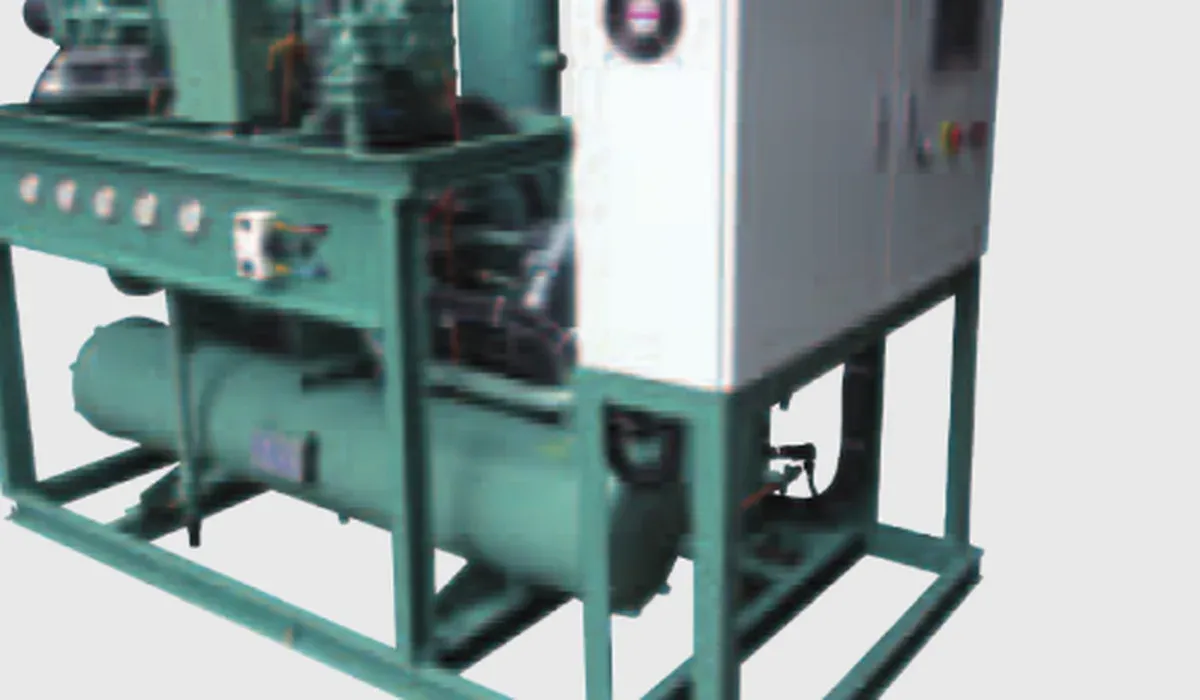
Start with what the catalog does say, because it clears away half the confusion. COOLEST's air-cooled piston series, the KLPH, covers an evaporating temperature of 12.5°C to -25°C. The water-cooled piston series, the SL, covers exactly the same range: 12.5°C to -25°C for medium/high temperature, and -5°C to -40°C for the low-temperature versions of both. The compressors are the same BITZER semi-hermetic piston machines. The refrigerants are the same: R22, or R404A on the Y models. The power supply is the same 380V/3P/50Hz. If you only read the specification tables, there is no reason to prefer one over the other — and that is the point. The specification tables describe the unit. They do not describe the room, the roof, or the water supply. The choice lives outside the tables.
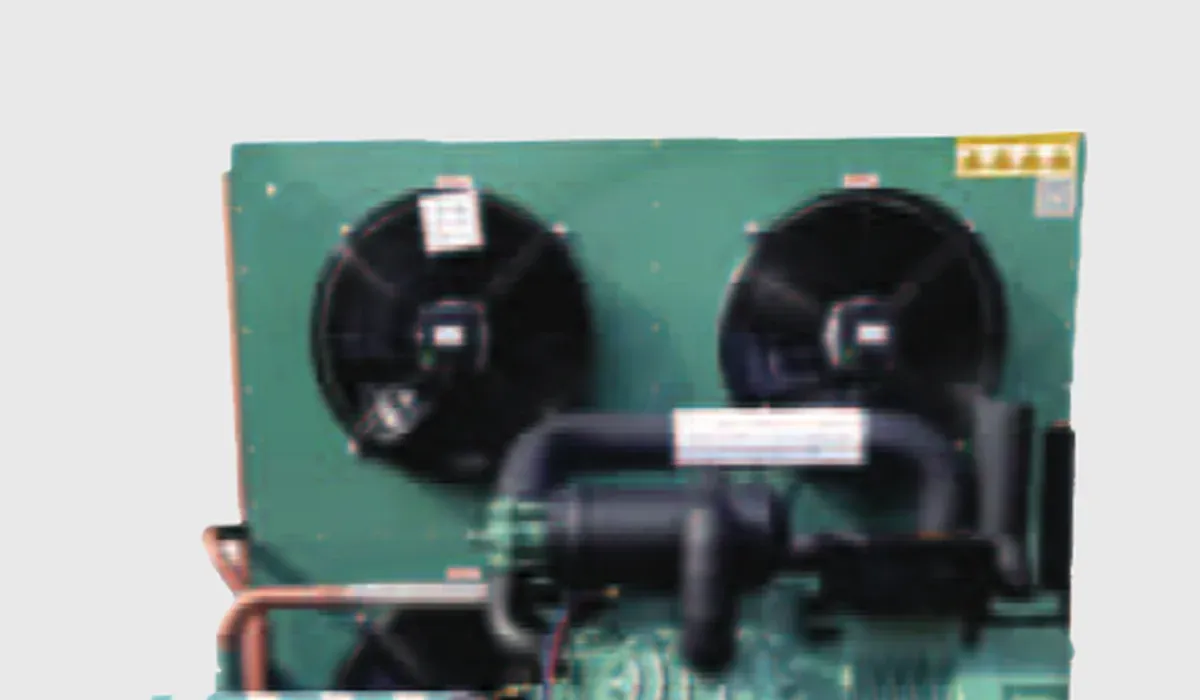
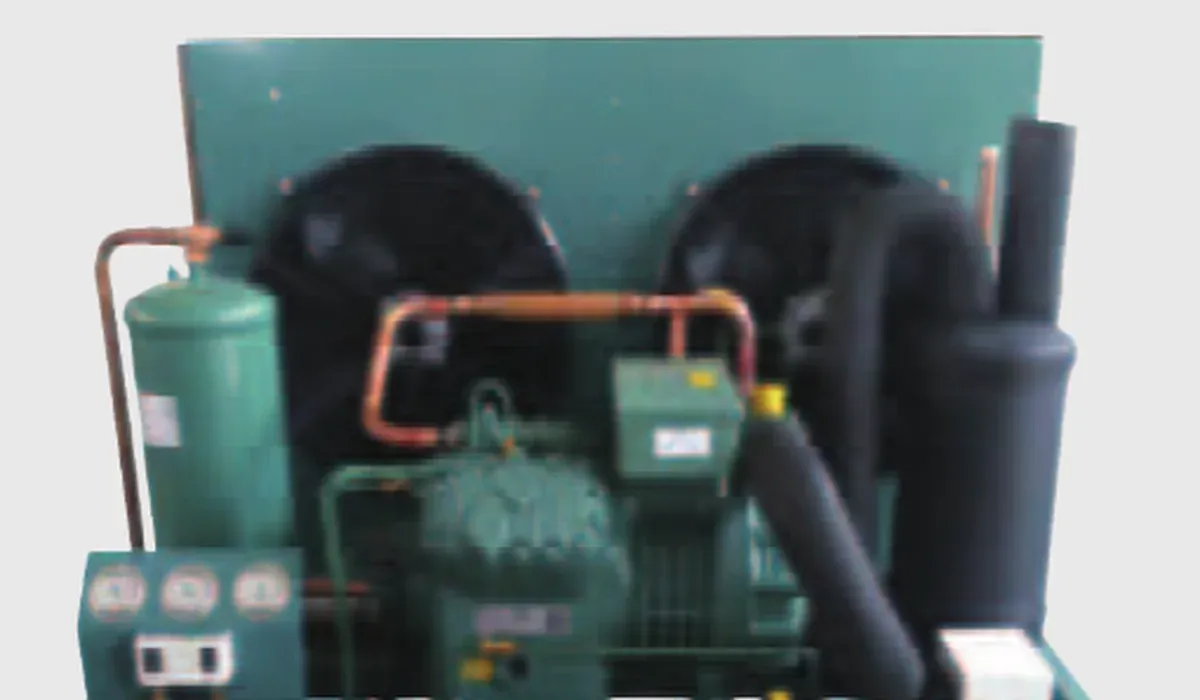
What the catalog does show, if you read it as a site checklist, is the shape of each method. The air-cooled unit carries its own condenser and its own fans: the smallest KLPH model, the 2KES-05, runs an FN12 fan moving 2,670 m³/h. That tells you two things without any extra data. First, the unit needs air — a real volume of it, moving freely around the coil. Second, the heat goes into that air, so the air around the condenser gets hotter, and on a hot day the condenser works against warmer air. The water-cooled unit has no such fan table, because its heat goes into water instead. That tells you the opposite: no large airflow is needed, but water must be there, it must keep flowing, and it must go somewhere afterwards.
The evidence gap is the site itself. Most buyers choosing between the two methods do not have three numbers written down: the hottest ambient temperature at the exact spot the condenser will sit, the airflow available around that spot, and whether water — supply and drainage — is available in the plant room. Without those three, the comparison is guesswork, and the guess usually follows whichever quote arrived first or whichever unit the buyer has installed before. That is not a technical decision. It is a habit, and habits are how the wrong method gets ordered.
The decision, in three checks
Do the checks in this order, because the first one that fails ends the discussion.
First, where will the condenser sit, and what is the air like there? An air-cooled condenser needs open air and room to breathe — not a sealed plant room, not a corner boxed in by walls, not a rooftop spot that bakes in the sun with no shade and no wind. If the spot is open, ventilated, and the hottest-day temperature there is within the range the unit is built for, air-cooled is the simpler install: no water, no drainage, no second system to maintain. The KLPH series is the direct answer for medium/high-temperature rooms in that situation, and the KLPL covers the same question down to -40°C. If the spot is enclosed, or the air there is already hot from other equipment, stop and consider water-cooled — an air-cooled unit in a hot, sealed room will not hold the room temperature, and no amount of extra fan will fix the air it is breathing.
Second, is water already there? A water-cooled SL unit needs a reliable water supply and a place for the water to go. If the site already runs water to other equipment, or a cooling tower is already on the roof, the water-cooled route is a short step. If water has to be run in from scratch — new pipework, a new drain, possibly a tower — that work belongs in the quote, and it often erases the price advantage of the water-cooled unit itself. Buyers who forget this line item discover it during installation, when it is too late to change the method without reordering. Ask the question before ordering, not during installation: who supplies the water, where does it drain, and what does that work cost?
Third, who maintains it, and what does the site already look like? A buyer who already runs water-cooled equipment has the people and the routine for it. A buyer whose whole site is air-cooled has fans, filters and outdoor access as a habit. Matching the new unit to the maintenance the site already does is worth more than a small efficiency difference on paper — especially since the catalog gives no water-consumption or running-cost figures to compare, and this guide will not invent any. If the two methods are genuinely tied after the first two checks, pick the one your maintenance routine already covers.
Different buyers land in different places. A cold storage contractor building a new room on an open site will usually land on air-cooled: the install is self-contained and the variables are visible. A food-processing plant with water already reticulated through the building will often land on water-cooled. A distributor stocking for resale should stock the method the local installers ask for, not the one that looks better in the catalog — the installers are the ones who live with the site conditions.
What can go wrong, and what this guide does not cover
Four mistakes account for most of the trouble. The first is assuming water-cooled is always more efficient. It can be, on a site with good water — but the catalog states no efficiency comparison between the two methods, and neither does this guide. Do not let a salesman turn a site condition into a universal claim. The second is assuming air-cooled works anywhere there is a wall to mount it on. It does not: a condenser in a sealed room recycles its own hot air, and the room temperature drifts upward on the hottest days, which is exactly when the cold room is under the most load. The third is ordering before the evaporating temperature is fixed. Both series cover the same ranges, so the temperature does not choose the method — but it does choose the model, and a unit ordered for -10°C will not do a -30°C job. Fix the room temperature first, then the method, then the model. The fourth is treating catalog figures as guarantees. The catalog says so itself: sample data is for reference only, designs may change without notice, and detailed specifications are fixed in the contract. Use the tables to shortlist, not to promise.
There are also boundaries this guide does not cross. It does not cover screw-compressor units — the HSK and HSN series, which run to -45°C and suit larger cooling loads — because the comparison changes at that scale and deserves its own guide. It does not cover parallel units, two-stage units, or box units. And it does not give prices, lead times or certifications, because the catalog gives none, and this guide invents nothing. If a supplier quotes you a water-consumption figure or a running cost, ask for the conditions it was measured under before you compare it with anything.
Your next step
Walk the site with three questions and write the answers down. One: where exactly will the condenser sit, and is the air there open and moving, or enclosed and already warm? Two: is water available at that spot — supply and drainage — or would it have to be run in, and at what cost? Three: what evaporating temperature must the room hold, and what cooling load does it need? Those three answers decide the method. Then send the room temperature and the cooling load through the inquiry form, and ask for the matching model — KLPH or SL — with a quotation. The KLPH series page carries the full specification table for the air-cooled side, so you can check the model range before you write. Do the site walk first; the model choice takes minutes once the method is settled, and it takes weeks to undo if the method was wrong.